Showing posts with label Blogging. Show all posts

Monday, 16 May 2022

Bath in Somerset - rubber duck not included

Bath, Somerset, England.
An ancient city dressed in honey-coloured Georgian elegance, steeped in Roman history, and proudly listed as a UNESCO World Heritage Site. It’s the sort of place where the past isn’t just preserved—it’s parked on every street corner like a politely stationary time machine.

Hop-on-hop-off tourist buses weave through the city, and if you find yourself on the open-air top deck during a downpour, you’ll notice something delightfully practical: plug holes. Yes, real drains to stop rainwater from pooling like—well, like a bath.

I’m fairly certain all open-top buses have them, but the quiet delight of noticing this in a city literally named Bath felt like the sort of accidental poetry that stays with you. Sadly, no rubber duck floated by.

Before you even arrive in Bath, you must pass through Somerset, the county that surrounds it. It's comprehensively lovely—quintessentially English in the way postcards promise. 

Picture rolling green hills, a lattice of hedgerows, and vast pastures. People have been calling this area home since the Paleolithic era (think Fred Flintstone), followed by the Celts, Romans, and Anglo-Saxons—each leaving a footprint in the soil or stone.

A short hop away, Cheddar Gorge offers not just stunning scenery but serious archaeological cred. It’s home to Cheddar Man, the UK’s oldest complete human skeleton, dating back to 7,150 B.C. (No, not made of cheese, in case that crossed your mind). 

Meanwhile, Glastonbury—home to the famously muddy music festival—sits on what’s known as a "dry point," meaning it's one of the few flood-free bits of ground in the area. Irony noted.

Back in Bath, the Royal Crescent stands as one of the finest examples of Georgian architecture in the country—a graceful arc of 30 terraced houses, all uniform yet grand, and listed as Grade I, which in UK terms means: do not mess with it.

Across town, the Roman Baths offer a glimpse into ancient spa culture. In Roman times, a day wasn’t complete without a good steam, a communal soak, and perhaps a bit of philosophising about empire over hot water. It was muscle recovery meets mindfulness—a wellness trend about two millennia ahead of its time.

The city’s spa tradition hasn’t gone cold. In 2021, Bath was added to the UNESCO list of Great Spa Towns of Europe, celebrated for their natural mineral springs. One wonders about the modern infrastructure behind it all—filtration systems, maintenance budgets, the quiet toil of keeping ancient rituals hygienic.

Also worth noting: Uranus was discovered here. Yes, really. In 1781, local resident William Herschel spotted the planet from his backyard using a homemade telescope. It remains one of the more awkward astronomical announcements in history, but his Georgian house now serves as a museum, so everyone wins in the end.

Bath is a short train ride from London, but don’t make the mistake of trying to squeeze it into a day trip. There’s far too much to soak in.


Thursday, 12 May 2022

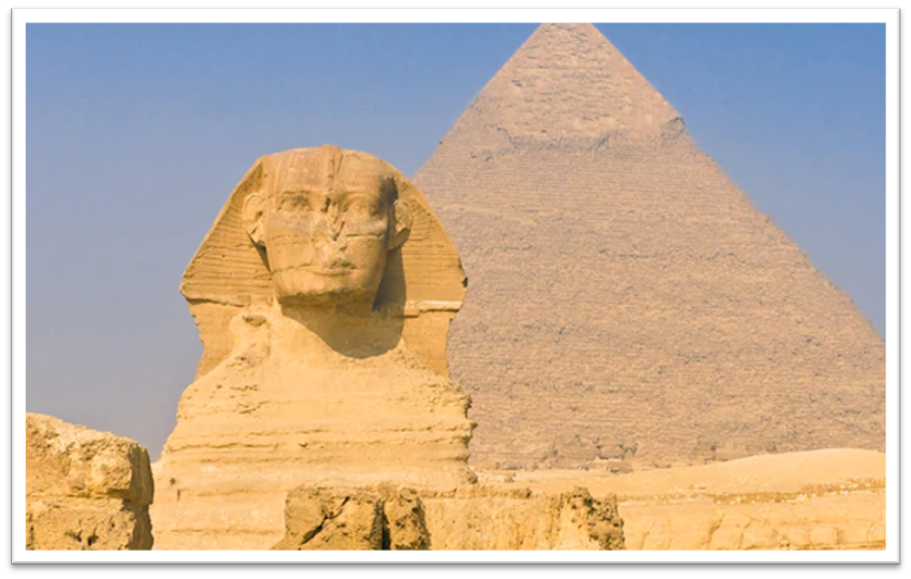
Egypt - and the big pyramid scheme

Today in my writing challenge of places of historical significance I’m heading to Egypt – which is exciting I guess, but I’m a little confused as to why I chose it. Do they have anything old antiquey, or ancienty? I guess I can take a look to see what I can find but, the last time I checked, they just had those giant Ikea triangles scattered around Giza.

Okay let’s hit up those wonders of Ancient Egypt, the tombs built for three different pharaohs – Ronald McDonald, Hamburlar and Grimace. I present to you… McDonald’s Cairo! Just kidding. 

There is currently no evidence, in prevailing archaeological theory, that Giza’s 4,500-year-old Pyramids, sitting on the ancient necropolis, are memorial structures for the three kings. But they look remarkable, and I feel like the view is unimprovable. The Pyramids look like they would have been an almost supernatural achievement for people to build thousands of years ago, but if really could not have been that hard because there is now one at a hotel in Las Vegas. 

“Being in a pyramid is like being on the internet. It’s full of people worshiping cats, writing on walls and using odd symbols” – The Internets

In Ancient Egypt, the Leader of the Central Government was the pharoah. There were about 300 of them over Egypt’s long history. He was in charge of the yearly rise and fall of the Nile, the fertility of the soil, the keeping of peace, and the fortunes of the army, and was also high priest of all temples, commander-in-chief of the army and head of state administration.

It’s a bit like the current French Government, where Emmanual Macron is charge of national defence down to who is going to fix a Normandy village’s potholes. But the pharoah mostly had minions to do all the work for him. In carvings the pharoah is portrayed as colossal - larger than life - which is to convey a message that they were important and powerful.

We know a lot about the everyday Ancient Egyptians. They lived beside the Nile River, some were poor, some were rich. They worked as farmers, clerks, government officials, craft workers, soldiers, traders, priests. They were foodies. They played games - possibly an early Nintendo, they sang songs - potentially did some rapping, and told bad jokes. They were religious. They made gorgeous building for their gods and made the gods offerings. They believed in life after death and taxes. They travelled. They traded and went to war with other countries.

They were family folk. They loved some of their neighbours, but not all of them. They used makeup and wore different hairstyles. Some were schooled and could read and write. Some went into the family trade. Sometimes they got sick with a toothache, broken bones, malaria and called in the doctor. They rarely lived more than 40 years. They shopped, they fished and hunted. They had pet dogs and cats and gazelles.

How do we know all this? Well not too many of them had Instagram so it’s largely through hieroglyphs; their ancient written and drawn communication method that some people have learnt to read. One day, in thousands of years, someone is going to come across an old Apple iPhone with a cracked screen and think, well they should have carved their thoughts onto a real wall rather than a Facebook feed, because this thing is broken and additionally rechargers haven't existed for 1,500 years. But I digress.

The way to read hieroglyphs was actually forgotten about for 1,000 or so years before Napoleon of France invaded Egypt and the Rosetta Stone was found, which described how to reach them and hieroglyphs were discovered again.

In Ancient Egypt times, people would place everyday and objects in their tombs that would be useful in the next life. If you were poor it might be some pots, but if you were Elon Musk it would furniture, weapons, food, jewellery, a few Teslas and Twitter.

Often they were looted, but some were so well hidden they are preserved to this day – like the pharoah Tutankhamun’s. 2000 of his possessions were in there, many made in gold, including his solid gold death mask (which sounds like something from the disco era). Tutankhamun was not even an important pharoah so we can only imagine what the powerful pharaohs had in their tombs.

Athens speak louder than words

Athens is the heart of Ancient Greece civilisation, with 5th century BC landmarks just completely littering the place, so move along, nothing to see here.

Today we are heading over to the Acropolis (High city) of Athens, a stunning citadel that sits atop of a rock in the middle of the ancient city. The Acropolis dates back to 447 BC (5th century BC thus 2,468 years thus 128,793 weeks ago*), and its Parthenon was dedicated to the Greek goddess Athena, the goddess of wisdom and warfare (the jury is out on whether those things go together).

The Acropolis contains the ruins of ancient buildings of great historical and architecture significance, with the Parthenon famously sitting in the centre. While the white marble of the Parthenon has suffered damage over the centuries its basic structure has remained stunningly intact. The structure consists of Doric (ancient Greek style architecture) columns and extremely detailed friezes (a fancy panel of decorations on the roof, but not like bunting) and pediments.

Over its lifetime it’s been used to store munitions, converted into a church and then a mosque, an army barracks, and has widely been looted and bombed. 

The Parthenon is known as a symbol of Athens political, economic and cultural superiority and its democracy, and was built to celebrate the victory over the Persians who had been occupying Athens. It was dedicated to Athena to thank her for her moral support and cheese and olive toasties she provided during the war.


The artwork that was saved in mostly in the Acropolis Museum in Athens.  Back in the day, an interior designer/sculpture was commissioned to decorate the newly established Parthenon. His team whipped up a set of classic Greek marble sculptures – now known as the Parthenon Marbles. 

In 1812, an English aristocrat – the 7th Earl of Elgin – removed/bought about half of the surviving marbles (other half being in the Athens museum) in a potentially shady business deal, shipped them to Britain, and sold them to the UK Government. I’m just wondering about the shipping costs that Amazon would have charged for that, and what type of ship, and how long it took, and did they get bubble-wrapped for shipping? But that’s not important right now.

Anyway, fast forward to 2022, and a squabble continues between the Greek and UK Governments over who legally owns the Parthenon marbles (colloquially known as the Elgin Marbles), with Greece saying its Acropolis "is the only place you can admire them in context”, and the UK saying it legally acquired them in accordance with laws at the time of them been moved to UK, and probs won’t be giving them back.

Alright, well let’s keep moving through the Acropolis then and try not to get involved in any more international legal disputes. Is Greece looking after its ancient artifacts? One could certainly argue that the preservation of ancient ruins are better off in the gloved hands of museum curators, wherever those museums may be, than laying around the grounds of ancient ruins in Athens.

My mum visited the Acropolis in the 2000s and told me that the columns are just laying around everywhere and she was able to sit on one. 

While the aesthetic of the Acropolis’ skyline is iconic, one could also reason more could be done to prevent erosion of marble and structural damage of temples from acid rain. What about a giant tarp over the top? I don't know, obviously, but researchers must be looking into it surely.

Other things about Athens that are nice to know: ðŸ‘‡

It’s the oldest European capital – 3,400 years oldest 

The Ancient Olympics were never held in Athens – wait, what 

Athens had the first ever democracy, known as demokratia 

Athens has the most theatres in the world, more than Broadway and London’s West End combined 

During construction of transport lines to support the Athens 2002 Olympic Games, one of the greatest archaeological hauls of ancient artifacts were uncovered. How very Athens.

* if this maths is wrong let the record show that I don’t know maths. 


Friday, 13 April 2012

Blogger Grim

Sometimes I really feel like writing something on my exceptionally average blog, but I feel a crushing sense of blogger's block. Obviously it's not that grim, because words are being produced, but it's bothersome none the less. At these trying times, I try to think of the kids in the Horn of Africa. Because they don't even have access to Blogger.  The horror.  Settle down, I'm not mocking the Third World, I'm just a pragmatist.

If I had my way, there would be no leftwingers with any power or authority anywhere in the world - including key posts in the United Nations - as they are completely incapable of handling any international crisis due to their weak ideological dispositions and senseless decision making and, thus, there would be proper policies in place that would mean that no kid in the whole world would be without Blogger. Or food.  Maybe. Well I imagine the situation would be far less dire if we could just find a way to disband the hapless U.N.

And I can think of a whole bunch of world military leaders who just get in the way of anything decent and good, but the United States aren't allowed to 'take them out' because that would make the U.S. the bad guys, apparently. This is just part of The Wonderful World of Leftwing Logic.  When I say 'take them out', I don't mean on a date; I mean the other thing.

Speaking of the world's bad eggs, I note that renown psycho, Robert Mugabe, is dying, but unfortunately it didn't happen years ago in his prime killing days. But fortunately there is a front row seat waiting for him on the rollercoaster to hell. It's a very long front row.  Why have I been so preachy and self-righteous lately? FFS. And why am I blogging about hell and death and starving children and mass murderers? FFS. I am totally depressed now.

Monday, 6 February 2012

Elizabeth II

No, this blog post isn't about me.  How pretentious do you think I am?  I thought I knew you...

Now, everyone needs to pipe down and just be resigned to the fact that I am going to do another post about HM the Queen Elizabeth II, because today is the 60th anniversary since she acceded to the top British regal gig after her beloved father, King George VI, died when she was just 25.  And she's still kicking butt with a tiara firmly ensconsed up on her head after all these years.

The poor bastards who read any of my rambling queeny posts last year would appreciate my adoration of her Maj, and I would prefer anyone else to quit judging me with your beady little Republican eyes.  Why y'all hatin' on the royals?  Monarchists have feelings too, you know.

You may get sick of hearing about my unrequited regal love, but one would prefer to pour molten lava into one's ears than listen to the blithering of Republicans and their anti-royal whinging and whining.  Try not to think about my love of all things royal too much or you may find yourself on YouTube screaming something incoherent at a town hall meeting.

And no, I don't have to explain to you why I love the royals; that's the beauty of being the doyen of your own blog.  In fact, my question to you is 'why can't you be more like the royals, and less like yourself?'  Ah, just jokes.  We're all friends here.  Apart from any serial killers who might read my posts.  I'm sorry jail-bound readers, but we are not even remotely friends, but I'm sure someone out there will be your pen(itentiary) pal. 

Did you know that there are 233 prisons in Australia?  And god knows how many there are in America.  That's a lot of bad people with access to broadband.  That's what you get when you murder people; free food, free accommodation, free gym and free internet access for life.

Sometimes I notice on my blog stats that there is a spike of people in North America who read particular posts on my blog, and after I wonder why they read such nonsense I wonder how they interpret my writing, because, no offence* American cyberbot friends, but sometimes I query your understanding of irony and sarcasm, which is generally my preferred method of communicating with the world. 

If you are ever in any doubt, you can take 50% of pretty much everything I write on here with a grain of salt.  Unfortunately you'll have to work out for yourself which 50% is which, which isn't very helpful, given that when you may think I'm being silly I'm often being quite sincere, and vice versa.  The blogosphere can be a cruel mistress, but my blog is usually a load of hokum so don't get your knickers in a knot. 

Oh darn it, I forgot to blog about HM the Queen because I was prattling on about myself.  No matter; she knows how awesome she is...

* Sorry, I momentarily became one of those people who says 'no offence' as though it magically made my ensuing comments non-offensive.  Sorry.  No offence.

Wednesday, 1 February 2012

The other F-word

There are many fascinating things to read on the internet, and I can assure you that this post is not one of them.  I know it's really, really rare for me to bitch about something that pisses me off on my blog, but this one really chafes.  It's the other F-word that gets my goat - February.

I can't handle the stress of having to say, let alone write, this god awful word for a month, and this year we have to do it for an additional day because it's a flippin' leap year. 29 long days of mispronouncing the month of Feb-ru-ary. That's right kids, who the hell says Feb-ru-ary? If you know anyone who does, bring them to me and I will deal with them.

Now everyone be nice to the 29er leaplings, who get their birthday this month, and are thus only a quarter as old as they should be. I suppose that's one way to avoid the ageing process.

Tuesday, 20 December 2011

118 not out...

Around June this year, in a moment of pure insanity, I decided that I was going to write 120 blog posts this year, which averages out to 10 a month.  Which doesn't sound like a lot, and it isn't, but it feels like a slog when you set yourself a goal and feel the need to achieve it.

I set myself this goal because I wanted to get into the habit of writing, and of writing daily.  It all fits into my grand plan of one day writing a greatly stupendous novel that will be read by a total of four people.  But I have realised that even though I am not always in the mood to write, when I do get an idea, I am vaguely disciplined enough to sit down and flesh it out.  The motivation is there when the ideas start to flow.  My perceived lack of motivation is actually a lack of ideas, rather than a lack of writing motivation, and I'm okay with that arrangement.  For now.

This blog has been fun so far, although I imagine it is a sleeping pill in online form for any sucker reading it.  Actually, anyone reading it should be grateful that they have found a destination where they can find out stuff about a subject they previously had no interest in and possibly even less interest in after visiting here.

So I'm currently on 118 posts not out, with two more to go for 2011, and then I'll take a creative break for a few weeks to recharge my creative batteries, but not in the wanky wine-and-cheese intellectual fashion. You know those types who talk about the zeitgeist but are, in reality, so out of touch with the zeitgeist that they think a painting of a red blob on a canvas says something about life as we know it.

Tsunami in Waikiki

The tsunami sirens wailed across Waikiki, slicing through the usual tropical stillness. We were warned: one hour until impact. A massive wav...