Showing posts with label Not actual travel. Show all posts

Thursday, 12 May 2022

Egypt - and the big pyramid scheme

Today in my writing challenge of places of historical significance I’m heading to Egypt – which is exciting I guess, but I’m a little confused as to why I chose it. Do they have anything old antiquey, or ancienty? I guess I can take a look to see what I can find but, the last time I checked, they just had those giant Ikea triangles scattered around Giza.

Okay let’s hit up those wonders of Ancient Egypt, the tombs built for three different pharaohs – Ronald McDonald, Hamburlar and Grimace. I present to you… McDonald’s Cairo! Just kidding. 

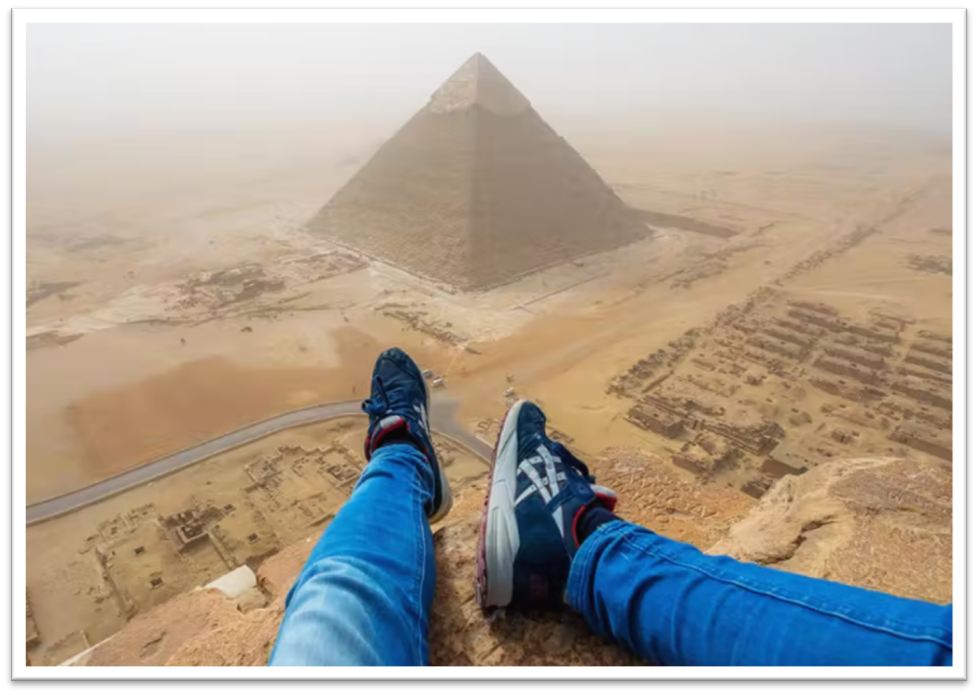
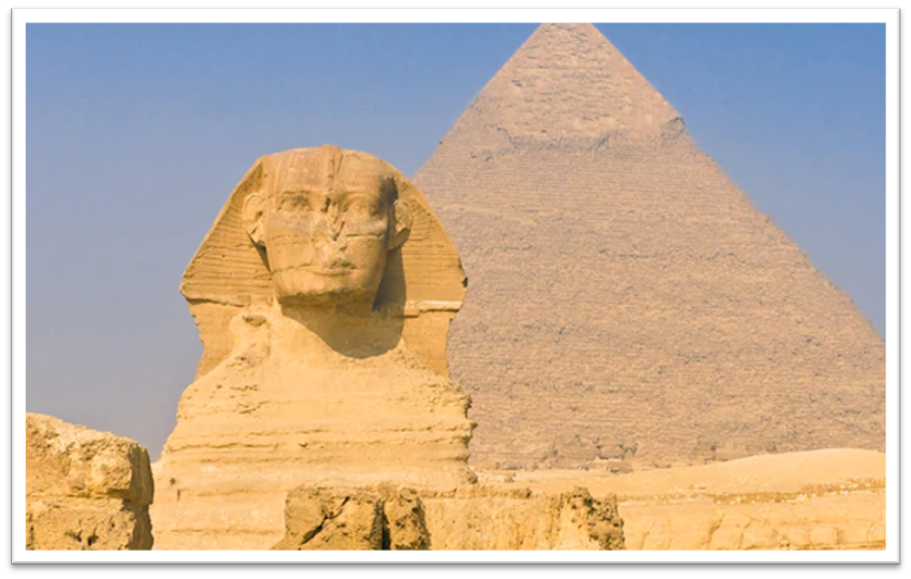
There is currently no evidence, in prevailing archaeological theory, that Giza’s 4,500-year-old Pyramids, sitting on the ancient necropolis, are memorial structures for the three kings. But they look remarkable, and I feel like the view is unimprovable. The Pyramids look like they would have been an almost supernatural achievement for people to build thousands of years ago, but if really could not have been that hard because there is now one at a hotel in Las Vegas. 

“Being in a pyramid is like being on the internet. It’s full of people worshiping cats, writing on walls and using odd symbols” – The Internets

In Ancient Egypt, the Leader of the Central Government was the pharoah. There were about 300 of them over Egypt’s long history. He was in charge of the yearly rise and fall of the Nile, the fertility of the soil, the keeping of peace, and the fortunes of the army, and was also high priest of all temples, commander-in-chief of the army and head of state administration.

It’s a bit like the current French Government, where Emmanual Macron is charge of national defence down to who is going to fix a Normandy village’s potholes. But the pharoah mostly had minions to do all the work for him. In carvings the pharoah is portrayed as colossal - larger than life - which is to convey a message that they were important and powerful.

We know a lot about the everyday Ancient Egyptians. They lived beside the Nile River, some were poor, some were rich. They worked as farmers, clerks, government officials, craft workers, soldiers, traders, priests. They were foodies. They played games - possibly an early Nintendo, they sang songs - potentially did some rapping, and told bad jokes. They were religious. They made gorgeous building for their gods and made the gods offerings. They believed in life after death and taxes. They travelled. They traded and went to war with other countries.
They were family folk. They loved some of their neighbours, but not all of them. They used makeup and wore different hairstyles. Some were schooled and could read and write. Some went into the family trade. Sometimes they got sick with a toothache, broken bones, malaria and called in the doctor. They rarely lived more than 40 years. They shopped, they fished and hunted. They had pet dogs and cats and gazelles.

How do we know all this? Well not too many of them had Instagram so it’s largely through hieroglyphs; their ancient written and drawn communication method that some people have learnt to read. One day, in thousands of years, someone is going to come across an old Apple iPhone with a cracked screen and think, well they should have carved their thoughts onto a real wall rather than a Facebook feed, because this thing is broken and additionally rechargers haven't existed for 1,500 years. But I digress.
The way to read hieroglyphs was actually forgotten about for 1,000 or so years before Napoleon of France invaded Egypt and the Rosetta Stone was found, which described how to reach them and hieroglyphs were discovered again.

In Ancient Egypt times, people would place everyday and objects in their tombs that would be useful in the next life. If you were poor it might be some pots, but if you were Elon Musk it would furniture, weapons, food, jewellery, a few Teslas and Twitter.

Often they were looted, but some were so well hidden they are preserved to this day – like the pharoah Tutankhamun’s. 2000 of his possessions were in there, many made in gold, including his solid gold death mask (which sounds like something from the disco era). Tutankhamun was not even an important pharoah so we can only imagine what the powerful pharaohs had in their tombs.

Athens speak louder than words

Athens is the heart of Ancient Greece civilisation, with 5th century BC landmarks just completely littering the place, so move along, nothing to see here.

Today we are heading over to the Acropolis (High city) of Athens, a stunning citadel that sits atop of a rock in the middle of the ancient city. The Acropolis dates back to 447 BC (5th century BC thus 2,468 years thus 128,793 weeks ago*), and its Parthenon was dedicated to the Greek goddess Athena, the goddess of wisdom and warfare (the jury is out on whether those things go together).

The Acropolis contains the ruins of ancient buildings of great historical and architecture significance, with the Parthenon famously sitting in the centre. While the white marble of the Parthenon has suffered damage over the centuries its basic structure has remained stunningly intact. The structure consists of Doric (ancient Greek style architecture) columns and extremely detailed friezes (a fancy panel of decorations on the roof, but not like bunting) and pediments.

Over its lifetime it’s been used to store munitions, converted into a church and then a mosque, an army barracks, and has widely been looted and bombed. 

The Parthenon is known as a symbol of Athens political, economic and cultural superiority and its democracy, and was built to celebrate the victory over the Persians who had been occupying Athens. It was dedicated to Athena to thank her for her moral support and cheese and olive toasties she provided during the war.


The artwork that was saved in mostly in the Acropolis Museum in Athens.  Back in the day, an interior designer/sculpture was commissioned to decorate the newly established Parthenon. His team whipped up a set of classic Greek marble sculptures – now known as the Parthenon Marbles. 

In 1812, an English aristocrat – the 7th Earl of Elgin – removed/bought about half of the surviving marbles (other half being in the Athens museum) in a potentially shady business deal, shipped them to Britain, and sold them to the UK Government. I’m just wondering about the shipping costs that Amazon would have charged for that, and what type of ship, and how long it took, and did they get bubble-wrapped for shipping? But that’s not important right now.

Anyway, fast forward to 2022, and a squabble continues between the Greek and UK Governments over who legally owns the Parthenon marbles (colloquially known as the Elgin Marbles), with Greece saying its Acropolis "is the only place you can admire them in context”, and the UK saying it legally acquired them in accordance with laws at the time of them been moved to UK, and probs won’t be giving them back.

Alright, well let’s keep moving through the Acropolis then and try not to get involved in any more international legal disputes. Is Greece looking after its ancient artifacts? One could certainly argue that the preservation of ancient ruins are better off in the gloved hands of museum curators, wherever those museums may be, than laying around the grounds of ancient ruins in Athens.

My mum visited the Acropolis in the 2000s and told me that the columns are just laying around everywhere and she was able to sit on one. 

While the aesthetic of the Acropolis’ skyline is iconic, one could also reason more could be done to prevent erosion of marble and structural damage of temples from acid rain. What about a giant tarp over the top? I don't know, obviously, but researchers must be looking into it surely.

Other things about Athens that are nice to know: ðŸ‘‡

It’s the oldest European capital – 3,400 years oldest 

The Ancient Olympics were never held in Athens – wait, what 

Athens had the first ever democracy, known as demokratia 

Athens has the most theatres in the world, more than Broadway and London’s West End combined 

During construction of transport lines to support the Athens 2002 Olympic Games, one of the greatest archaeological hauls of ancient artifacts were uncovered. How very Athens.

* if this maths is wrong let the record show that I don’t know maths. 


Tsunami in Waikiki

The tsunami sirens wailed across Waikiki, slicing through the usual tropical stillness. We were warned: one hour until impact. A massive wav...