Thursday, 29 August 2024

Feeling Homesick in California? Laguna Beach Might Just Be the Cure

You could drop your finger almost anywhere on a map of California and land on a place that's become part of pop culture since the 1960s. Laguna Beach is one of those spots.

Tucked behind a winding canyon road and nestled between Crystal Cove State Park and the Pacific Ocean, Laguna Beach is a coastal enclave that was once quiet and unassuming. Then came the 2000s and Laguna Beach: The Real Orange County — the MTV reality show that launched the town into global fame. It followed the lives, romances, and drama of rich local teens, making the town a backdrop for youthful aspiration and beachside glamour.

But despite its celebrity, what struck me on a recent visit was something entirely different: Laguna Beach felt like home — home being Australia. If you’re feeling homesick on a Californian trip, here are five reasons to head south of Los Angeles and find a little slice of Oz in Orange County.

1. The Weather

Southern California’s climate mirrors the east coast of Australia in summertime — warm days, not overly humid, and comfortably mild evenings. Rain is rare, and while that’s a plus for sunshine chasers, it also means the region flirts with desert-like conditions and occasional extreme weather. Still, for a homesick Aussie, the sun-drenched days feel just right.

2. The Vibe

Laguna Beach oozes that laid-back, beachside charm you find in coastal Australian towns. Cafés spill onto the streets, locals wander around in relaxed attire, and the general mood is unhurried. It has an element of Mediterranean chic, without any pretension — think white arches, Mediterranean rooftops, and eucalyptus trees swaying above the sidewalks. Somehow, it just feels Australian.

3. The Landscape

Reaching Laguna Beach involves a drive through low coastal canyons — dry, scrubby, and sun-soaked — the kind of landscape every Aussie recognizes from childhood trips to the coast. The hills are dotted with muted-toned mansions, many perched on stilts, facing the Pacific like lions soaking in the sun. They’re designed with Mediterranean flair: terracotta tiles, arched windows, and balconies that cling to cliff edges.

The roads carve through gulleys lined with hardy desert plants, eucalyptus trees, and dry grasses. And just like many of our best Aussie beaches, the final stretch to the coast feels like a hidden reward at the end of a bushland drive.

4. The Eucalypts

There’s no mistaking the scent. The sharp, nostalgic aroma of eucalyptus fills the air. Their leaves gather in gutters, their shade cools the streets, and their presence — visually and aromatically — completes the illusion. It looks like Australia. It smells like Australia. If you close your eyes for a moment, you might just forget where you are.

5. Fish and Chips by the Beach

No Aussie beach visit is complete without fish and chips, and Laguna doesn’t disappoint. Picture this: white lounge chairs on the sand, shaded by soft umbrellas; cafés with pale yellow tablecloths and planters full of hardy native plants; the gentle clink of cutlery as diners enjoy their meals under fairy lights strung across boho boutiques. Even a knight in shining brass armor stands guard outside one shop — because why not?

Just across from the beach, a candy store offers mountains of taffy in vintage barrels, next to cafes serving grilled seafood, cool drinks, and — yes — fish and chips. It’s the ultimate comfort food for anyone a little too far from home.

A Stroll Through Town

Wandering the streets, you’ll spot a mix of architectural styles — from Swiss-inspired wooden buildings with white shutters to Mediterranean villas with ivy-covered walls and terracotta roofs. Big wooden planters line the footpaths where car parks once were, now full of café tables and fairy lights.

Umbrellas in red, yellow, and blue flap gently in the breeze, while boutiques sell neutral-toned clothing and handmade accessories. The street lights are delicately styled, almost Victorian, and the sidewalks are shaded by those ever-present gum trees.

Down on the Beach

A long wooden boardwalk runs the length of the beach, where rules strictly protect pedestrians from rollerbladers and cyclists — a rare but welcome regulation. Volleyball nets lie dormant, likely waiting for a weekend crowd. The sand is pale and soft. The waves, at least today, are calm. An offshore island provides a playground for birds.

The lifeguard tower stands like a piece of ornate sculpture — a whitewashed beacon with blue trimmings, overlooking the water. Looking south, the coastline curves to reveal a headland dotted with hotels and swaying palms.

Final Thoughts

Laguna Beach might not be the Australia you left, but it’s the kind of place that understands the rhythm of beach life — relaxed, understated, beautiful in its own way. Whether it’s the scent of eucalyptus, the taste of salt on the air, or the familiar crunch of chips by the shore, it offers a comforting echo of home. And sometimes, that’s all you need

Tuesday, 30 July 2024

A Glimpse of “Jamala” – A Little Tour Recap

I recently took a tour of Canberra’s National Zoo and Aquarium’s famed Jamala Wildlife Lodges, and from the moment I stepped into uShaka Lodge I was completely charmed.

Before the tour officially began, I wandered through uShaka, taking in the stunning African-inspired interior—rich in detail, with artefacts either ethically sourced from Africa or specially commissioned for Jamala. The vibe? Think Disneyland’s Adventureland meets The Lost City, with a healthy dose of high-end design flair.

Walking past a glowing firepit and two towering lion statues flanking a staircase, I half-expected to see Indiana Jones hunched over a weathered map, plotting something thrilling and wildly under-researched. (No photo, just my imagination.)

As we exited uShaka to begin the guided tour, I gave one last look at the wall that also houses the aquarium’s shark tank—which, impressively, managed to almost be upstaged by the ambiance of this African dreamscape.

We were whisked away in proper adventurer fashion (read: a comfy minibus), led by a guide with Indy-level charm and wit. Thankfully, she steered us clear of giant rolling boulders and snake pits. First stop: the Tiger Jungle Bungalow.

Epic moment—one of the tigers was snoozing on the balcony, his massive paws pressed against the floor-to-ceiling glass, stretching and yawning like an oversized housecat. 

Next, we arrived at the Giraffe Treehouses, stopping at the gate to feed the wandering fallow deer with carrot and celery snacks. Once inside, the treehouses lived up to Jamala’s reputation for exquisite design—chic, immersive, and absolutely committed to its stylish animal print aesthetic. Outside, the giraffes were calmly munching on treetop treats.

The tour went for about an hour and was well worth the time. Great experience. 

Thursday, 16 March 2023

The niche world of the antiques fair

While vintage shopping is certainly in fashion among younger crowds, who eschew fast fashion for its often unethical manufacturing practices and lack of sustainability, I’m not sure antique shopping is on their radar, just yet. I recently went to my first antiques fair and found it left the modern consumerist society and its relentless pursuit of things in the dust. For the sake of preserving history, you could give antique fairs a go. 

Things are at a different pace at an antiques fair. Everything slows down. It’s like watching an old movie through a 35mm slide viewer. The buyers appreciate items with approving nods, deliberate, debate, does an appraisal of products, checking and comparing prices with a competitor’s store – although sometimes comparable items are circa hundreds of years apart, which I guess would make it a bit complicated if you were trying to buy a new iPhone circa 1830. 

The buyers delve deep into the history with the seller, and share stories of similar items held within their families. I guess you could call me an antiques fair eavesdropper. I met a man who owns a 15th Century cabinet from Normandy that he uses to store his evening beverages and showcase his model aircraft. I admired a Victorian mahogany writing slope, with a spot for your quills and ink and a storage area for whatever they stored in 1860, and I wondered if the seller would throw in a free workplace assessment to get me set up at home. 

An antiques fair is not the headspace of the modern consumer or indeed one with an increased cost of living, and many who like contemporary furniture, state-of-the-art goods and other quick and dirty (and low-priced) products of questionable quality and resilience. We are so used to cheap products being seized off shelves with a fleeting glance at its price, with a quick selection of which colour to purchase.

I bought a spoon.

The consumer may check where the product was made on the tag, but no great concession is really made on that account if the product is what the consumer wants or needs. And once that product expires, a new one will replace it and the cycle will continue forever until we are no longer absorbed by the endless pursuit of consumer goods and shopping for the sake of it, or until toasters are no longer required and bread just cooks itself.

Antique fairs are definitely a niche, but there is something to be said for the romanticism perhaps of the story cards attached to antique items, that describe the piece, its origin if known and when and why it was in use, and it encourages, at least for myself, more research into the history. 

My starting strategy at the fair to cypher the antiques buyers and sellers code was to watch and learn and then see pretty things I know nothing about and buy them. A consumerist strategy that is ill-advised at an antiques fair, but it’s an honest life, and an honest strategy. I certainly did not go into it intending to buy a stunning pale blue early Victorian (1837-1901) salt glazed ale jug circa 1850, but when in Rome. More on that later.

There were not a lot of clocks, which was disappointing as I come from a long ancestry of collectors of time tellers, and evidently (someone told me at the fair) there are many stories of clocks discontinuing working when their owner operator passes. Perhaps that person had a special way, knew how to work the dong, had the midas touch.

I’m not sure what I was expecting but it was not a heavy supply of antiques of English Georgian, Victorian or Edwardian origins. The western consumer in me speculated what I could possibly do with a Georgian silver plated tea urn circa 1780, a Victorian silver plated biscuit sachet maker circa 1880 or a brass candlestick circa 1870, but I maybe missed the point. It is preserving history, not buying a thing that I need. As it turns out, I googled the pale blue Victorian jug as I was walking around and found it to be really quite overpriced and over my set budget so it didn’t come home with me. Research helps enormously, whether you’re a newby or have been in this game for years. 

A top tip for newby collectors is if you see something significant to you that sparks joy (and is under your set budget), buy it. I saw a charming delicate gold spoon that was reasonably priced and I bought it. Sparked joy. Not sure it’s tough enough to swivel my morning coffee, but it looks pretty.

I also met a man whose son runs a business clearing out old estates who told me about the increasing volume of vintage and antique pieces that are consigned to the garbage dump. With that in mind, I would say attach a story card to all your possessions that are important, sentimental or whimsical to you, so they can be discussed at an antiques fair in the future. If there is a story card, I will read it.

Monday, 10 October 2022

Floriade 2022: Canberra’s Paris Fashion Week for Flowers

It’s that time of year again — when an epic public event in Canberra bursts into bloom and turns garden beds into catwalks. Floriade 2022 is here. Think Paris Fashion Week, but for flowers. And yes, the tulips are absolutely serving looks.

Canberra’s iconic spring flower show transforms the city’s lake centre into a month-long spectacle each September and October, with millions of blooms on display. Locals emerge from their winter hibernation, while tourists descend en masse to witness this blooming runway of seasonal trends - from classic tulips to fringe florals making their debut.

I arrive on a grey Saturday afternoon, but the overcast skies do nothing to dull the brightness ahead. The flowers are ready to smell, and so are the cheerful volunteers, doubling as walking info kiosks. There's no official sign declaring it, but the unspoken rule is clear: take photos — lots of them.

Right at the gate, tulips are perched in tough steel wheelbarrows — proving once again that they’re the supermodels of the flower world. As the saying goes, tulips would look good even in a garbage bag. No blue sky required — their joy shines through on any canvas.

The star of the show? Tulips -  the Dior of the flora world. They're everywhere: popping from bunches, bursting from beds, overflowing from wheelbarrows, and printed on every kind of Floriade merchandise imaginable. Around them, a pretty supporting cast of pansies, poppies, hyacinths, and daisies bring depth and colour to the ensemble.

I make a pit stop at a cute teal-and-white café caravan, grabbing a coffee and sitting under giant black-and-white striped umbrellas. The soundtrack? What I assume is Australian country music — foot-tappingly good. From my seat, I catch a view of a tulip-lined walkway that doubles as a runway between the garden beds.

The flowers are the models, the garden beds their catwalk, and the red gravel paths their red carpet. Who needs Paris when you have this?

And this runway is busy. A woman sprints back to her tripod to snap a photo without herself in it. A family of ten poses in full colour-coordination (or lack thereof — bright seems to be the unspoken dress code). Teenagers take selfies. Adults take selfies. If dogs were allowed in, they’d be strutting through the beds snapping selfies too.

Instagrammers and fine art photographers alike lean in close for the perfect shot. First, a macro of a bloom. Then one with the Ferris wheel in the background. Then again, from another angle. Click. Adjust. Repeat. One child gets too close and is swiftly intercepted by a parent delivering a full-scale botanical lecture.

There isn’t an angle or lighting condition left unexplored. I can’t help but wonder how many of these already-striking flowers will be digitally altered before their Instagram debut. A little more contrast, a touch more saturation — as if nature needs filters. But hey, if it helps the local tourism industry, who am I to judge?

And while all this happens in Canberra, across the globe at Paris Fashion Week, Victoria Beckham drops her Spring 2022 Ready-to-Wear collection. Coincidence, or is there a whisper of Canberra tulip-core in her palette?

Because colour sells, and tulips know it.


Monday, 5 September 2022

Even cowboys watch the setting Hawaiian sun

It’s sunset on the world-famous Waikiki beach. Is it Monday, or a Thursday, I don’t know. Out on a concrete jetty, local teens are gathered in large groups down the end before individually flinging themselves off the seawall into the ocean below into a giant swell or as it breaks on the rock wall. 

Like the activities of teens anywhere in the world, the practice looks relatively unsafe. Their friends help them clamour up the wooden planks on the seawall so they can do it again.

A blue sign with white writing lists the beach rules. No boozing, no tents, no annoying tourist behaviour, that sort of thing. 

There is a preacher across the road preaching, reading from the Bible. He is being drowned out by the crashing of the surf on the shore and against the sea wall. This week is a super full moon which comes with very prominent tides and swells.

Up on the beach, a young man in mirrored sunglasses and orange swimming shorts jumps onto his tattered red hammock that is perfectly roped between two robust palm trees. Like a cowboy jumping on the back of his mount, he is ready to ride off into the sunset. He has no spurs but there is a pair of sandals neatly placed at the base of one of the trees. He kicks the ground to send the hammock into a low swing. The trade winds will keep it going. Did I mention he is wearing a black cowboy hat?

It’s windy tonight and sea breezes are already working the beach. The persuasive palm trees along this stretch of sand dutifully sway for all the hammocked cowboys and the tourists, their soulful influence mesmerising all beach comers and beachcombers. Their coconuts heavily fortified to avoid any accidents that would make a tourist’s stay in Waikiki even more unforgettable.

It may well be a controlled psychological effect, but I hear a gentle melodic ukulele everywhere I go in Waikiki, or it might be the ukulele shops I have spotted along the strip that sell the popular Hawaiian musical instrument.

On the jetty a trio of teenagers from Oahu are filming for their YouTube channel. That morning they decided to ask strangers to give them money for completing challenges as requested by the strangers for payment, so they could earn enough money for airfares to neighbouring Maui the next day. They are dripping wet, as they have each just jumped off the jetty for USD$5 each. They are USD$40 short of their target when I ask them.

There are all sorts on the beach – some wrapped up in their own romantic love story, oblivious to other tourists, some sitting alone, some with others, some chatting, some sitting together quietly. The fading blue hues change to yellows and pinks as the sun plays hide and seek behind low clouds and all heads turn its way. It’s strange when you think that all healthy eyesight advice tells you not to look at the sun and then you hit a certain time of the day where you are encouraged to look at the beautification of the sun while it disappears.

The sun is playing peek-a-boo now, challenging the photo taking capabilities of hundreds of iPhone users on the beach. There are tourists watching from their balconies right along the strip. Lots of selfies, lots of photos. 

As the sun peeps out for its final decline, many a tourist’s hands reach up to pretend to embrace or cup the sun in the palm for photos, like a giant interpretative sun dance. And then it is gone and many leave the beach for other activities, and the Maui trio walk off and head into Subway. They will all likely be back tomorrow.

Wednesday, 13 July 2022

Coles and IKEA recruiting through creative promotions

I have gotten into the spirit of ‘consumerism through children’ with the latest of Australian retailer, Coles', collectable series, which is promoting its new Harry Potter range. 

The Coles Magical Builders are cardboard cut-outs of all the characters from the Harry Potter and the Fantastic Beasts cashcow empires, with the catch (for grown-ups) is you have to assemble them yourself. They come separately swathed in tiny tough cardboard flatpacks with instructions for their assembly on a tiny piece of paper. It’s like miniature IKEA. The instructions are impossible to see and also not terribly helpful but I am also impressed that they produce so little paper wastage.

With a resolve to demonstrate that I have the dexterity and cognitive function of a six year old, I decided to put one together. As it turns out, only tiny fingers can pop out the tiny cardboard fragments of arms and legs and owl wings and wizard beards. 

As ever with activities that are designed for children, I generally require child supervision to work out how to troubleshoot, but not on this occasion! I stabbed those diminutive suckers out using a sharp kitchen knife.

I’m guessing Coles aren’t considering my requirements in their customer base. Speaking of IKEA and companies that know their base, the Swedish megabrand have recently put “career instructions” inside their IKEA products that are labelled “how to assemble your furniture” in a push to recruit people who use IKEA products, which resulted in thousands of applicants and a whole bunch of people were hired who liked and used IKEA products. Hire your brand’s current customers and ambassadors  – good idea. What would also be a good idea would be to put in these boxes ‘how to actually assemble your furniture – like, some actual instructions”. Anyway.

So perhaps, with that in mind, and with the ol’ tradie shortage around areas of Australia that aren’t currently undertaking emergency disaster restorations, Coles perhaps should be looking for future tradies and engineers through this current tiny cardboard promotion. 

If you can assemble the tiny Ron Weasley character without the instructions (or even with the instructions) and you’re only seven, of if can assemble it to put Dumbledore’s head on his knees (but deliberately), then you have just won yourself a fast-tracked carpentry career. Very fast-tracked. Faster than a speeding Japanese superman bullet train. Anyway, there’s some foods for your thoughts, Coles. 

Wednesday, 6 July 2022

Cinema advertising and the leading genres in movie blockbusters

If you spend a while in the foyer of a major cinema you’ll notice that the movie-making industry really applies itself to the cause of persuading you to buy things, and its efforts are quite productive. 

The ice creamery promotes peace, love and ice cream, with a deeply held predilection that you just buy the ice cream. I feel the need, the need to buy ice cream (an artistic depiction of an iconic Top Gun quote for the two people in the world who may have not seen the cult classic).

The good old fashioned games machines work the room entertaining young children as they contest game after game. People are buying popcorn in ten litre buckets overpowered with butter on the inside and movie marketing on the outside. Even the cinema advertiser advertises itself on a wall monitor. It’s the hustle. 

Some patrons stand back, deep in group negotiations, staring at the electronic boards assessing movies times, personal schedules, movie lengths. They are doing maths. Maths is hard and fraught with danger and should be rewarded with popcorn. Cinemas know this. Two people bolt through the foyer with popcorn. They are late for the start of their movie, but they at least have popcorn, and considerable balance and coordination.

And then the foyer falls quiet. Quiet enough for a moment to hear distant reverberations from cinematic enthusiasm and you can feel the aftershocks through the floor if you are close enough to the action. A cinema foyer is an entertainment gateway and an advertiser's dream.

A movie has finished! Patrons trickle out, gesturing with vast hand movements and excitedly recreating and refashioning portions of the movie script. It undoubtedly was Top Gun: Maverick. Someone alert Tom Cruise; the fans have gone wild. Don’t worry – I think he knows.

His movie has just clocked over USD$1.1 billion of box office sales. It currently sits at the 29th highest grossing film of all time, but likely to crawl higher up that list. Since opening globally in May/June this year, his movie has 51% share of the U.S domestic and worldwide markets, which means folks are heading out in droves to see Tom and his planes.

I feel the need, the need to see this movie.
In movie blockbuster terms, you could reason that  the action genre (encapsulating tales of utter and colossal disaster and Thor) would hold supreme, with the highest gross film of all time (Avatar), the Jurassic series, the Avengers and all manner of other super heroes and now Top Gun in its stables. But this isn’t the case. 
 
Market share for movie genres from 1995-2022 shows that adventure has actually been the number one genre, followed by action, drama  and comedy.

The adventure genre is heavily dominated by distributors Walt Disney and 20th Century Fox, who are both unrelenting in exploiting their legendary cash cows that include Star Wars, Lord of the Rings, Spider-Man, Hunger Games, Toy Story, Pirates of the Carribean. 

However, at the mid mark of the 2022, it is indeed the action genre (57% of market share) that is leading the pack in blockbusters, with adventure (19%) straggling in its wake. Maybe it’s more Covid-19 fallout, with less adventure movies being made during the last few years. 

Alas, for your noting, if you are thinking of directing an educational movie, please know it traditionally earns 0% market share. Maybe lob some fighter planes in there and email Mark Ruffalo to see if he’s available for a cameo.

Monday, 16 May 2022

Bath in Somerset - rubber duck not included

Bath, Somerset, England.
An ancient city dressed in honey-coloured Georgian elegance, steeped in Roman history, and proudly listed as a UNESCO World Heritage Site. It’s the sort of place where the past isn’t just preserved—it’s parked on every street corner like a politely stationary time machine.

Hop-on-hop-off tourist buses weave through the city, and if you find yourself on the open-air top deck during a downpour, you’ll notice something delightfully practical: plug holes. Yes, real drains to stop rainwater from pooling like—well, like a bath.

I’m fairly certain all open-top buses have them, but the quiet delight of noticing this in a city literally named Bath felt like the sort of accidental poetry that stays with you. Sadly, no rubber duck floated by.

Before you even arrive in Bath, you must pass through Somerset, the county that surrounds it. It's comprehensively lovely—quintessentially English in the way postcards promise. 

Picture rolling green hills, a lattice of hedgerows, and vast pastures. People have been calling this area home since the Paleolithic era (think Fred Flintstone), followed by the Celts, Romans, and Anglo-Saxons—each leaving a footprint in the soil or stone.

A short hop away, Cheddar Gorge offers not just stunning scenery but serious archaeological cred. It’s home to Cheddar Man, the UK’s oldest complete human skeleton, dating back to 7,150 B.C. (No, not made of cheese, in case that crossed your mind). 

Meanwhile, Glastonbury—home to the famously muddy music festival—sits on what’s known as a "dry point," meaning it's one of the few flood-free bits of ground in the area. Irony noted.

Back in Bath, the Royal Crescent stands as one of the finest examples of Georgian architecture in the country—a graceful arc of 30 terraced houses, all uniform yet grand, and listed as Grade I, which in UK terms means: do not mess with it.

Across town, the Roman Baths offer a glimpse into ancient spa culture. In Roman times, a day wasn’t complete without a good steam, a communal soak, and perhaps a bit of philosophising about empire over hot water. It was muscle recovery meets mindfulness—a wellness trend about two millennia ahead of its time.

The city’s spa tradition hasn’t gone cold. In 2021, Bath was added to the UNESCO list of Great Spa Towns of Europe, celebrated for their natural mineral springs. One wonders about the modern infrastructure behind it all—filtration systems, maintenance budgets, the quiet toil of keeping ancient rituals hygienic.

Also worth noting: Uranus was discovered here. Yes, really. In 1781, local resident William Herschel spotted the planet from his backyard using a homemade telescope. It remains one of the more awkward astronomical announcements in history, but his Georgian house now serves as a museum, so everyone wins in the end.

Bath is a short train ride from London, but don’t make the mistake of trying to squeeze it into a day trip. There’s far too much to soak in.


Saturday, 14 May 2022

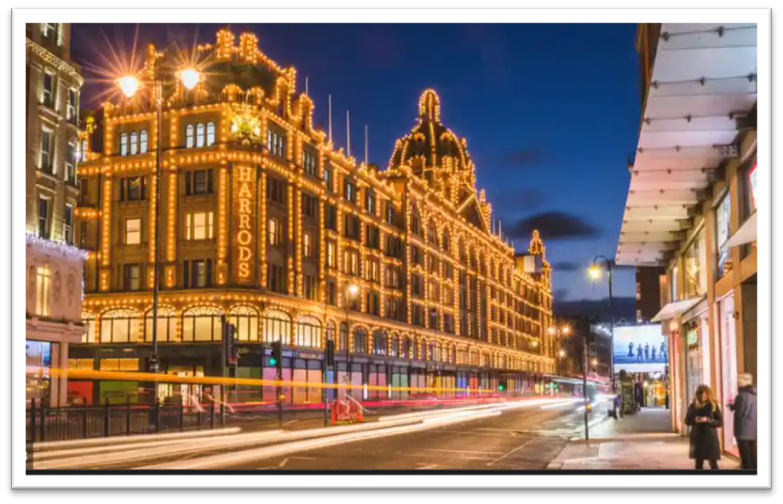
Harrods - and that time they sold lions

Today the writing challenge is heading to one of the most celebrated department stores in the world, Harrods of London. It might not strictly meet the brief of places of historical significance, and I appreciate any concern you might have on the matter, and any confusion or inconvenience caused, but Harrods has a long history. And it’s my blog. Also, disclaimer, Harrods is absolutely my favourite. 

In term of shopping centres, it doesn’t get any more exclusive that Harrods, which has voted itself the “world’s most famous department store”, and who can disagree with the GOAT. 

The largest department store in Europe, it is the land of opulence and luxury, lavishness and magnificence, with more than 300 in-house departments in store, and 100,000m2 of fancy handbags, Prada gold clubs and all of the other fabulousness they stock on their shelves. They probably don’t call them shelves; that is too…..Sainsburys. They probably call then product royal mantels, or something. 

Harrods came from modest little beginnings, as everything must do at some point. In 1832, a wee London East End grocery store was established and named after its owner, Mr Harrod. Mr Harrod developed a business portfolio and had some stores about town, that sold various items for which Harrods is now synonymous, but on a much less grander scale. 

The site on which Harrods stands now became a key asset for Mr Harrod and sold perfumes, stationary, medicines and fruit and vegetables. It was not unusual to bump into Sigmund Freud or Oscar Wilde at the checkouts, with Freud psychoanalysing your shopping basket and determining that your Id is well and truly in charge of your grocery list.

Harrods was first to introduce an escalator, because you can’t have Mr Freud wasting all his thought time trying to negotiate stairs when he’s busy psychoanalysing customers. Speaking of psychotic, in the early days, Harrods used to also sell cocaine. In 1916, it used to sell a kit containing cocaine, morphine, syringes and needles, as a present to send to friends on the front in the war. 

And at one point, the store used live snakes to guard expensive jewellery and also introduced the selling of exotic animals including panthers, alligators and lions. Which is awful and extremely random but also so very Edwardian era. In more uplifting news, Harrods has a chip shop in its food and beverage enclave. 

It also has a fabulous souvenir gift store. I own one of Harrods signature items, a shiny olive green tote bag that they sell to the innumerable tourists who pass through the checkouts. I also own a grey one. I’m a sucker for this sort of stuff and have never met a London souvenir that I have not fell instantly in love with in a very serious way. I’ve got three pens that look like the London Buckingham Palace guards, and you press their fur hat to click the pen open. Adorable.

And here’s a cool thing. The new head honcho pastry chef at Harrods is an Aussie. Philip Khoury started working there in 2018 and in December 2021 he was appointed the boss of all things sweet tooth. What a gig! 

In this time, he has begun pioneering plant-based dessert, which he calls the “last frontier” of vegan cuisine, rethinking the traditional eggs and dairy based model as the holy grail of exceptional desserts. Apparently kicking out dairy from the recipe allows other flavours to pop. 

This is interesting, as the global plant-based food market is expected to reach $USD70 million in the next five years, and certainly is projected to double in the UK in that time. Presumably this is a calculated move by Harrods to play in the USD$7 billion plant-based food market (up from USD$5.5 billion in 2019) as consumers are more and more aware around issues relating to food sustainability and nutrition of the products they are consuming. And with up to 300,000 customers a day at its peak, Harrods has an influential role to play.

And if you are lucky enough to visit the beautiful, gargantuan money spinner that is Harrods, and need somewhere to park the Ferrari or the Vauxhall Astra, there is a single carpark nearby that you can buy for a cool £85,000, which is ostensibly about £84,995 more expensive than other parks in the area. 

It comes with a fob, CCTV, a water supply (unclear if they mean a tap, or an Agean Sea type body of water), and a 960 year lease. Yeah, I give the Ferrari engine three months before it blows, let alone 960 years. Or you can just take the Tube like the rest of London.

Thursday, 12 May 2022

Egypt - and the big pyramid scheme

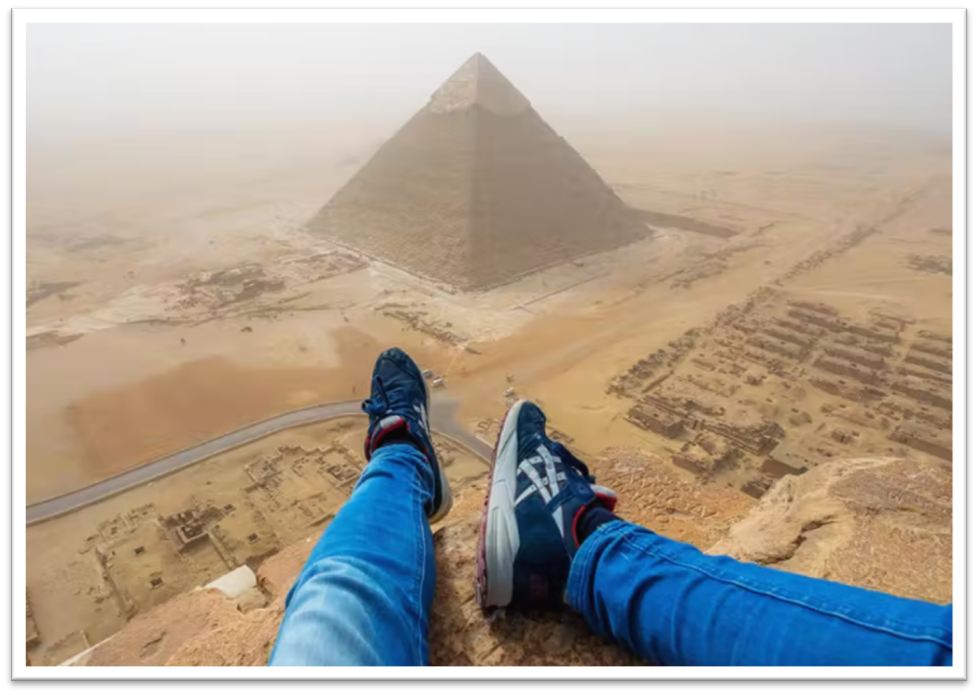
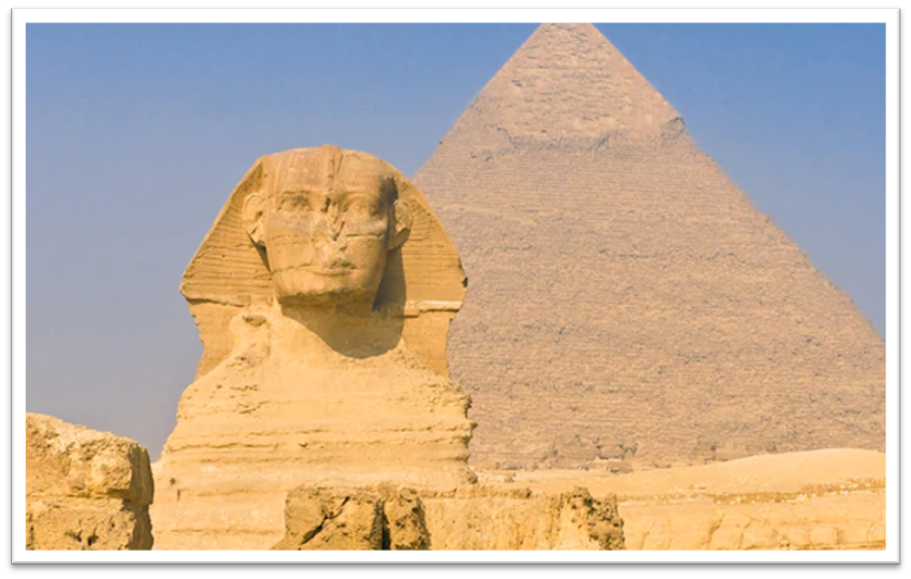
Today in my writing challenge of places of historical significance I’m heading to Egypt – which is exciting I guess, but I’m a little confused as to why I chose it. Do they have anything old antiquey, or ancienty? I guess I can take a look to see what I can find but, the last time I checked, they just had those giant Ikea triangles scattered around Giza.

Okay let’s hit up those wonders of Ancient Egypt, the tombs built for three different pharaohs – Ronald McDonald, Hamburlar and Grimace. I present to you… McDonald’s Cairo! Just kidding. 

There is currently no evidence, in prevailing archaeological theory, that Giza’s 4,500-year-old Pyramids, sitting on the ancient necropolis, are memorial structures for the three kings. But they look remarkable, and I feel like the view is unimprovable. The Pyramids look like they would have been an almost supernatural achievement for people to build thousands of years ago, but if really could not have been that hard because there is now one at a hotel in Las Vegas. 

“Being in a pyramid is like being on the internet. It’s full of people worshiping cats, writing on walls and using odd symbols” – The Internets

In Ancient Egypt, the Leader of the Central Government was the pharoah. There were about 300 of them over Egypt’s long history. He was in charge of the yearly rise and fall of the Nile, the fertility of the soil, the keeping of peace, and the fortunes of the army, and was also high priest of all temples, commander-in-chief of the army and head of state administration.

It’s a bit like the current French Government, where Emmanual Macron is charge of national defence down to who is going to fix a Normandy village’s potholes. But the pharoah mostly had minions to do all the work for him. In carvings the pharoah is portrayed as colossal - larger than life - which is to convey a message that they were important and powerful.

We know a lot about the everyday Ancient Egyptians. They lived beside the Nile River, some were poor, some were rich. They worked as farmers, clerks, government officials, craft workers, soldiers, traders, priests. They were foodies. They played games - possibly an early Nintendo, they sang songs - potentially did some rapping, and told bad jokes. They were religious. They made gorgeous building for their gods and made the gods offerings. They believed in life after death and taxes. They travelled. They traded and went to war with other countries.

They were family folk. They loved some of their neighbours, but not all of them. They used makeup and wore different hairstyles. Some were schooled and could read and write. Some went into the family trade. Sometimes they got sick with a toothache, broken bones, malaria and called in the doctor. They rarely lived more than 40 years. They shopped, they fished and hunted. They had pet dogs and cats and gazelles.

How do we know all this? Well not too many of them had Instagram so it’s largely through hieroglyphs; their ancient written and drawn communication method that some people have learnt to read. One day, in thousands of years, someone is going to come across an old Apple iPhone with a cracked screen and think, well they should have carved their thoughts onto a real wall rather than a Facebook feed, because this thing is broken and additionally rechargers haven't existed for 1,500 years. But I digress.

The way to read hieroglyphs was actually forgotten about for 1,000 or so years before Napoleon of France invaded Egypt and the Rosetta Stone was found, which described how to reach them and hieroglyphs were discovered again.

In Ancient Egypt times, people would place everyday and objects in their tombs that would be useful in the next life. If you were poor it might be some pots, but if you were Elon Musk it would furniture, weapons, food, jewellery, a few Teslas and Twitter.

Often they were looted, but some were so well hidden they are preserved to this day – like the pharoah Tutankhamun’s. 2000 of his possessions were in there, many made in gold, including his solid gold death mask (which sounds like something from the disco era). Tutankhamun was not even an important pharoah so we can only imagine what the powerful pharaohs had in their tombs.

Athens speak louder than words

Athens is the heart of Ancient Greece civilisation, with 5th century BC landmarks just completely littering the place, so move along, nothing to see here.

Today we are heading over to the Acropolis (High city) of Athens, a stunning citadel that sits atop of a rock in the middle of the ancient city. The Acropolis dates back to 447 BC (5th century BC thus 2,468 years thus 128,793 weeks ago*), and its Parthenon was dedicated to the Greek goddess Athena, the goddess of wisdom and warfare (the jury is out on whether those things go together).

The Acropolis contains the ruins of ancient buildings of great historical and architecture significance, with the Parthenon famously sitting in the centre. While the white marble of the Parthenon has suffered damage over the centuries its basic structure has remained stunningly intact. The structure consists of Doric (ancient Greek style architecture) columns and extremely detailed friezes (a fancy panel of decorations on the roof, but not like bunting) and pediments.

Over its lifetime it’s been used to store munitions, converted into a church and then a mosque, an army barracks, and has widely been looted and bombed. 

The Parthenon is known as a symbol of Athens political, economic and cultural superiority and its democracy, and was built to celebrate the victory over the Persians who had been occupying Athens. It was dedicated to Athena to thank her for her moral support and cheese and olive toasties she provided during the war.


The artwork that was saved in mostly in the Acropolis Museum in Athens.  Back in the day, an interior designer/sculpture was commissioned to decorate the newly established Parthenon. His team whipped up a set of classic Greek marble sculptures – now known as the Parthenon Marbles. 

In 1812, an English aristocrat – the 7th Earl of Elgin – removed/bought about half of the surviving marbles (other half being in the Athens museum) in a potentially shady business deal, shipped them to Britain, and sold them to the UK Government. I’m just wondering about the shipping costs that Amazon would have charged for that, and what type of ship, and how long it took, and did they get bubble-wrapped for shipping? But that’s not important right now.

Anyway, fast forward to 2022, and a squabble continues between the Greek and UK Governments over who legally owns the Parthenon marbles (colloquially known as the Elgin Marbles), with Greece saying its Acropolis "is the only place you can admire them in context”, and the UK saying it legally acquired them in accordance with laws at the time of them been moved to UK, and probs won’t be giving them back.

Alright, well let’s keep moving through the Acropolis then and try not to get involved in any more international legal disputes. Is Greece looking after its ancient artifacts? One could certainly argue that the preservation of ancient ruins are better off in the gloved hands of museum curators, wherever those museums may be, than laying around the grounds of ancient ruins in Athens.

My mum visited the Acropolis in the 2000s and told me that the columns are just laying around everywhere and she was able to sit on one. 

While the aesthetic of the Acropolis’ skyline is iconic, one could also reason more could be done to prevent erosion of marble and structural damage of temples from acid rain. What about a giant tarp over the top? I don't know, obviously, but researchers must be looking into it surely.

Other things about Athens that are nice to know: 👇

It’s the oldest European capital – 3,400 years oldest 

The Ancient Olympics were never held in Athens – wait, what 

Athens had the first ever democracy, known as demokratia 

Athens has the most theatres in the world, more than Broadway and London’s West End combined 

During construction of transport lines to support the Athens 2002 Olympic Games, one of the greatest archaeological hauls of ancient artifacts were uncovered. How very Athens.

* if this maths is wrong let the record show that I don’t know maths. 


Wednesday, 11 August 2021

Space Travel

"We're here to make space travel more accessible to all", said uber-entrepreneur, Sir Richard Branson, the linchpin and cashcow of Virgin Galactic, a fierce competitor in the new billionaires space race. With seats on board starting at USD$450,000, it might do to wait until the sales.

With Australia slamming shut its international borders for an entirely indefinite period of time in a tough stance to reduce the spread of COVID-19, it's interesting to look at other options for travel that are just as exciting as earth-bound travel, and indeed alternative ways of getting there. Outer space! 

What news from the outer space world? Well, here’s a thing. Space rockets have been hurtling from earth up into the stratosphere, one billionaire after another. Richard Branson onboard his Virgin Galactic, Elon Musk sending up his SpaceX, and that other billionaire, Amazon founder and business magnate, Jeff Bezos, on his Blue Origin journey. Pew-pew-pew-pew-pew and then fighting each other with giant laser beams - pew-pew-pew-pew-pew. Oh wait, no sorry, that’s Star Wars. I regularly get confused between Star Wars and IRL.

HAVING SAID THAT, I note that the U.S. Military have recently shot down an intercontinental ballistic missile in outer space from an aircraft carrier based off the coast of Hawaii in a testing exercise, so hi there Star Wars.

All of these recent space launches (with the exception of the extremely non-televised US military exercise) have been televised on some type of platform – TV network, YouTube, even Facebook stories. 

It’s always entertaining during space shuttle launches when the commentators discuss how long it’s going to take them to get to their destination, as if 27.5 hours was a long time, as is the case for the 4 astronauts that Elon Musk’s SpaceX recently took to the International Space Station (ISS). 

Girl, that’s a medium-haul international travel jaunt for Australians. Sydney to London is 23 hours more or less, and that’s not including airport waiting time, stopovers, lost luggage, impromptu body cavity searches, immigration control and waiting for a shuttle, which takes at least another 18 hours.

While the ISS altitude is only 408 km from earth, it takes over a day to get there, due to the spinny, spinny, upside-downy nature of our planet (that’s science-y talk – don’t feel bad if you can’t keep up with the terminology).

So what do they do on their roadtrip to above and beyond?

Well first of all, it’s not a roadtrip. It’s very serious space mission business and if you don’t know that, you can’t go. 

Second of all, there’s the snacks. When I fly international on a long haul, or drive to the shops on a relatively shorter haul, I always take snacks. What snack do the astronauts take and at what point in the first hour do they eat them all?

As you’d expect from NASA, the criteria for developing space food is: safety, stability, palatability, nutrition, resource minimisation, variety, reliability, and usability. Sure, but they probably just have M&Ms, and kill some time - and get some exercise - by chasing the little suckers around the zero-gravity cabin.

Also, are there even any Starbucks on the way if you need a caffeine pick-me-up? Who gets to drive? Can you call shotgun? Assigned seating is absolutely very serious business on a long haul. There’s certainly a slew of questions that I think we all want answered before we’ll fork out 450 grand. 

In terms of timeliness, I suppose taking a space ship to the ISS is slightly faster than taking the train, but I certainly don’t think you shave off that much time. 

One advantage of flying away from earth is you don’t have to put up with our pesky airport rules - no ticket counters, no passport control, no immigration checking to see if you’re carrying any activated vegemite and no waiting for shuttles that never come (or is that just LAX).

It certainly seems like, statistically, it’s a lot safer travelling on a space ship than a commercial earth-bound airline, specifically when it comes to take off and landing. On a space ship, you are flung into space and then flung back into the ocean. Perfectly safe. 

Boeing research shows that takeoff and landing are statistically more dangerous than any other part of a commercial earth-bound airline flight, with 49% of all fatal accidents happen during the final descent and landing phases of the average flight, while 14% of all fatal accidents happen during takeoff and initial climb. 

It's certainly often surmised by flight attendants in their pre-flight safety message that the plane will in fact crash if you don't return your tray table to the upright and locked position after your meal. Absolutely no need for food trays in space travel; your food floats. See! Space travel is the future.

So can you buy a ticket to go into space? Well, yes. I don't know about the future of international earth-bound air travel but space tourism will soon be a thing I'm sure of it, but it may be a wiser financial investment to just watch Star Wars.

Cost: $$$$$$$$$$$$$$$$$$$$$$$$$$$$$$$$$$$$$$$$$$$$$$$$$$$$$$$$$$$$


Monday, 9 August 2021

Corin Forest - Snowman's land


Give Canberra the cold shoulder one day and head to the beautiful winter wonderland, Corin Forest, just 45 minutes out of the capital. Every winter, the snow castle's gates open to the public at Corin Forest, and you get to witness amazing snowmaking in action. If you go on the right day, you'll definitely get the Banff treatment, with lightly falling snow, dreamy white snow-covered mountains and fun questions from chill-dren like "where does snow go when it melts?" It's puddles. It goes into puddles, and dies forever.

Corin Forest possesses magical superpowers that allows it to create snow, absolutely created with aesthetics in mind specifically for an afternoon's entertainment for the chill-dren. Oh sorry, no, that's the plot of Frozen the movie. But it's really a very similar narrative.

The road out there is a comprehensively and reliably lovely dose of Australiana, and also very winding, and you'll know you're getting close to your destination when you are abruptly and irrevocably plunged into snowman's land, and you start to see the omnipresent snowmen/women/people perched precariously on car bonnets and roofs that are returning to Canberra as they swing around the mountainous bends. Thank the chill-dren for that.

Rules of engagement for having an extremely acceptable snow experience:
  • Make your trip spontaneous. Watch the mountains and go on the day where you can actually see snow falling, because y’all are guaranteed some falling snow. Often it can melt quite quickly, or not settle at all, and then you'll just get mud. And maybe mad. At yourself. For not taking snow business more seriously.
  • Plan ahead if you want to do any of the planned things, like booking ahead to get onto the SNOWPLAY or SKI AND RIDE if you don't want to disappoint your chill-dren. If you don't like your chill-dren, see previous dot point.
  • What happens in the snow stays in the snow. Leave the snow at the snow. Don't put a snowman on your bonnet for the return trip to Canberra. Don't be that person. It's not some magical character from Frozen; it's just water. Unless you have a child in your car. And then you have snow choice in the matter.
  • Don’t drive like a drunken psychopath. There can be black ice. Don't be the person who skids off the edge. Your bonnet snowman will be very cranky, lose his cool and may have a meltdown. And then sue you.
  • Dress like a smart snowperson. Warm weather proof pants, layers, a warm jacket, gloves and weather proof shoes. You'll thank me.
  • Order a coffee or hot chocolate and hot chips or pizza at the cafe. 
All of this might might melt your cold, cold heart. Here's some pics.


Wednesday, 7 July 2021

Right Royal Sneakers

Last year I went on a virtual quest, conducting an extensive search on my journey to find new white sneakers. White sneakers were and remain stylish and très chic but also they just go with all of the things. If you can’t colour match your ball gown or bridesmaid dress to the same shade of white as your sneakers you need some emergency stylin’ counsellin’ and perhaps also some holistic alternative fashun therapy.

So in the absence of a drive through carwash style arrangement for shoes in my city, I turned to Youtube to help me, sure that I was going to have to Do It Yourself, by myself.

During my deep dive, through the internet of shoe things, I noted the Duchess of Cambridge’s whitesneakers, that she wears to ramble through drenched paddocks in Kent in England to provide a social call to Girl Scouts, and on never-ending ramblings in the torrential rain on the hustings on golf courses in St Andrews – if there is even the hint of an involvement of walkies or amblings on her itinerary, she will throw on her white sneakers.

I thought surely they must be comfy little buggers, although probably also retail for as much as a small two bedroom apartment in Bondi. But crucially, they never seem to look tainted with dirt or stains, which is just a big positive in shoes and also in life.

So I googled ‘Kate’s white sneakers’ and was introduced to the idyllic world of Superga. And, as it turned out, Kate’s shoes were available at the shopping centre across the road from where I live, and were on jumbo sale, and only cost as much as a one bedroom apartment in Bondi. Half an hour later, I had Kate’s white Supergas. Life’s opportunities were about to go stratospheric! I tear up a bit every time I tell that beautiful, heart-warming story of when we first met.

Six months down the track, the Supergas have been an outstanding investment, apart from two of the key components of outstanding investments being earning me an income or appreciating in value. Look, they have intrinsic value.

They also recently needed a deep clean, sullied by their hard life on the streets. Like many owners of hardworking 4WD vehicles who live in the city, these sneakers have not seen a paddock in their whole life.

So unwisely overlooking the fact they were leather, I put them in the washing machine, where they astonishingly survived my unintentional attempt to cause them grievous bodily harm. I am out on bail, but am expecting to be charged with attempted murder, punishable by a life sentence of cleaning Supergas with a toothbrush.

As it turns out, I do not recommend putting white leather Supergas in the washing machine. While they had the ride of their life, one they will not forget, it really did not do the trick at all for spruiking them up. They were still scuffed, and the laces were still stained black from the metal eyelets. It turns out my Supergas are not like regal Supergas.

While Youtube can be weird for providing you with maintenance advice, Jiff and a toothbrush is the help I unequivocally decided to go with. As it turned out, I didn’t have any Jiff, so I went in with a multi-purpose cleaner and a suitcase of hope and dreams. And it worked!

But the cleaning process took just about all day, on and off, and then they had to air dry, because I put them in the dryer and that sounded like I had abducted a small person and jammed them in for a quick 30 minute spin cycle. If that ever transpires - just know - all my neighbours think I’m normal and quiet and they would “never have expected that she would put a small person in the dryer, let alone of a pair of leather Supergas”.

I’m now left to ponder whether the Duchess of Cambridge does not have an enviable mass of officers to tend to her every Supergas cleansing whim, punishable by an hour on spin cycle if they refuse the assignment.


Tsunami in Waikiki

The tsunami sirens wailed across Waikiki, slicing through the usual tropical stillness. We were warned: one hour until impact. A massive wav...